
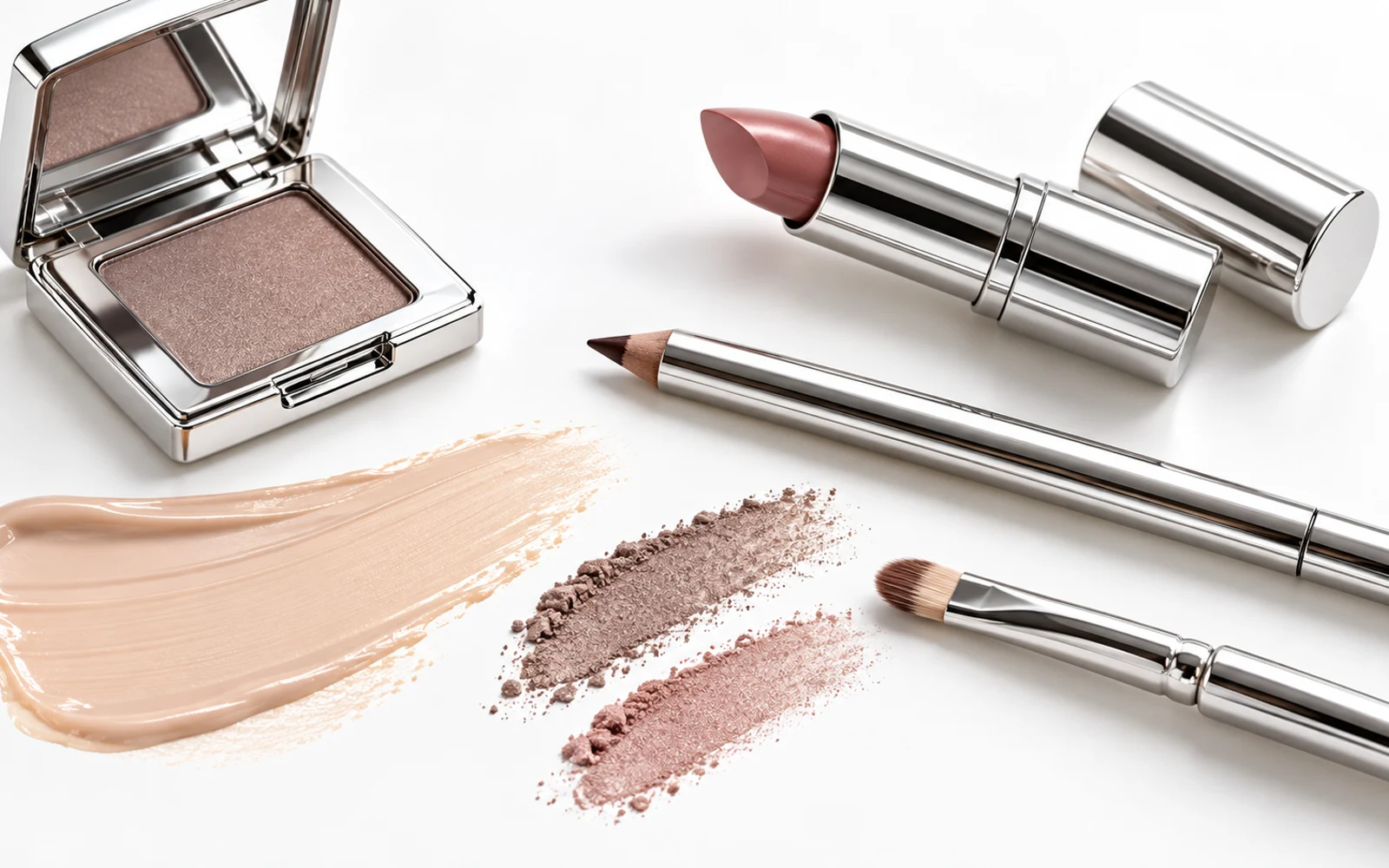
Begin with a thin base rather than a thick layer everywhere. Add concealer only where correction is still needed and build in small amounts. The following sections explore decisions, application and common pitfalls step by step.
Find the areas that need coverage
Begin with a thin base rather than a thick layer everywhere. Add concealer only where correction is still needed and build in small amounts.
Begin with a small amount near the centre of the face and blend the remainder outward. If one area needs more coverage, correct that area specifically. Check the face-to-neck colour relationship before adding another layer.
Blend edges deliberately
Blend the concealer edge into the base. A small brush places product while a clean sponge softens its border; the whole face does not need another layer.
Place concealer precisely and soften its perimeter. Large brush movements can move coverage away from the area that needs it. Pause and inspect the result before deciding whether another layer is necessary.
Balance eyes and lips
Taupe shadow and lash-line definition shape the eye without darkening the whole lid. A soft-edged rose nude lip complements the light complexion finish.
Here, European is a practical label for an understated neutral look, rather than a universal rule or a nationality. Choose cool taupe or neutral brown in relation to the skin’s undertone; the lightest shade in the palette is not automatically the best choice.
Powder selectively
Apply powder where shine needs control. Adding more over an already balanced cheek can reduce the lightweight feel. Reassess after each layer.
Load the powder brush lightly and target the areas that need control rather than coating the whole face. Keep a subtle distinction between satin skin and controlled areas. Inspect the result both close up and at a normal viewing distance.
Practise a thin base
Blend a small amount of base from the centre outward. Let the first layer settle before concealing areas that still need coverage. In a close daylight photo, skin texture should remain visible and the jawline should show no obvious base edge.
Check blended edges
Use a clean brush to diffuse the outer shadow edge without adding pigment. Place blush deliberately, then soften its perimeter. Add product only when needed; lift excess with a clean tool.
Frequently asked questions
Must skin look completely flawless?
This approach retains real skin texture and uses targeted correction.
Are false lashes essential?
No. Lash definition is chosen according to comfort and the intended effect.
Is this only for fair skin?
No. Shades and products are adapted to each skin tone and undertone.

