
A suitable base and thin layers can reduce heaviness. Wear time varies with skin, conditions and products rather than following one guarantee. The following sections explore decisions, application and common pitfalls step by step.
Wear does not mean thickness
A suitable base and thin layers can reduce heaviness. Wear time varies with skin, conditions and products rather than following one guarantee.
Inspect the finish after the layers settle. If coverage has moved in one spot, correct that spot. Applying another full-face layer can make areas that already look good feel unnecessarily heavy.
Before adding powder
For a shine touch-up, gently blot first. Add a little powder only if needed; repeated powder over shine can make the texture heavy.
Press blotting paper onto the area and lift it away; rubbing can move the makeup. Then use a small brush and a minimal amount of powder only where needed. Touch up in a mirror with enough light to inspect the texture.
A small touch-up kit
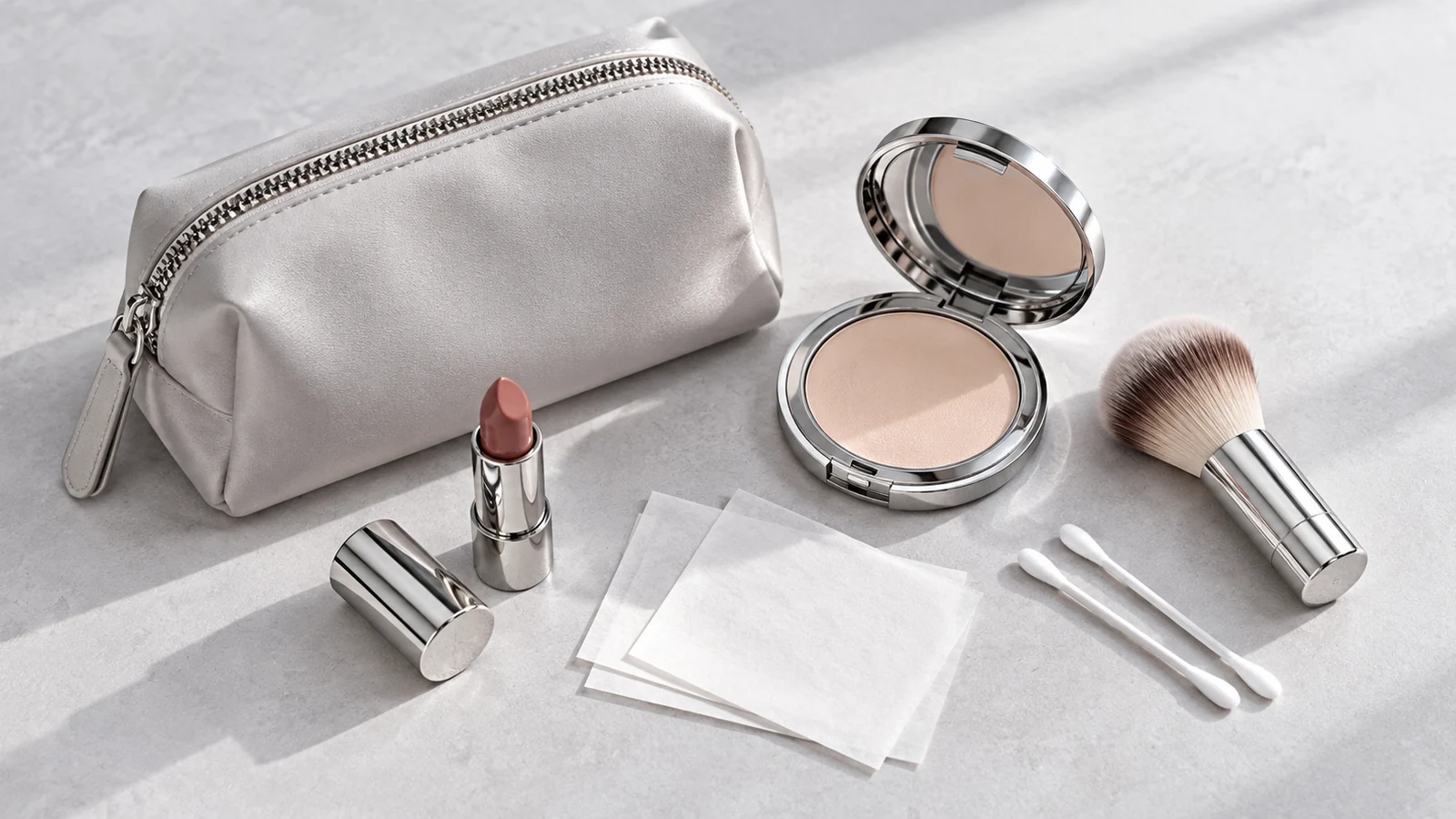
Your lip shade, blotting paper and a small clean tool can be enough. You do not need to redo the entire face. Discuss likely touch-up areas with your artist.
Prepare the touch-up kit beforehand and learn how to use it. For lips, gently tidy uneven remnants and add colour from the centre. If only the perimeter needs attention, several new layers across the entire lip may be unnecessary.
Check real lighting
Reassess in useful light after touching up. Natural cheek luminosity differs from excessive central shine; not every highlight needs powder.
Ask the artist to identify the areas most likely to need a touch-up. Consider the difference between room and photographic lighting, and do not treat a fixed wear-time promise as universal. Skin comfort and visible texture are part of the result.
Practise targeted touch-ups
Gently blot excess oil or moisture first, then correct only the affected area with a small amount of product. Reapplying base across the entire face at each touch-up can create unnecessary texture.
Prepare a light touch-up kit
Prepare the chosen lip colour, a clean tool and suitable blotting tissue. Agree on the touch-up sequence with the artist. Wear depends on skin, occasion conditions and how the face is touched; one fixed duration does not fit everyone.
Frequently asked questions
Does makeup last equally on everyone?
No. Skin, environment, products and application influence wear.
Should I immediately powder shiny skin?
Gently blot excess surface oil first, then add a little powder if needed.
What belongs in a touch-up kit?
The chosen lip colour, blotting paper and a small clean tool, agreed with your artist.

