
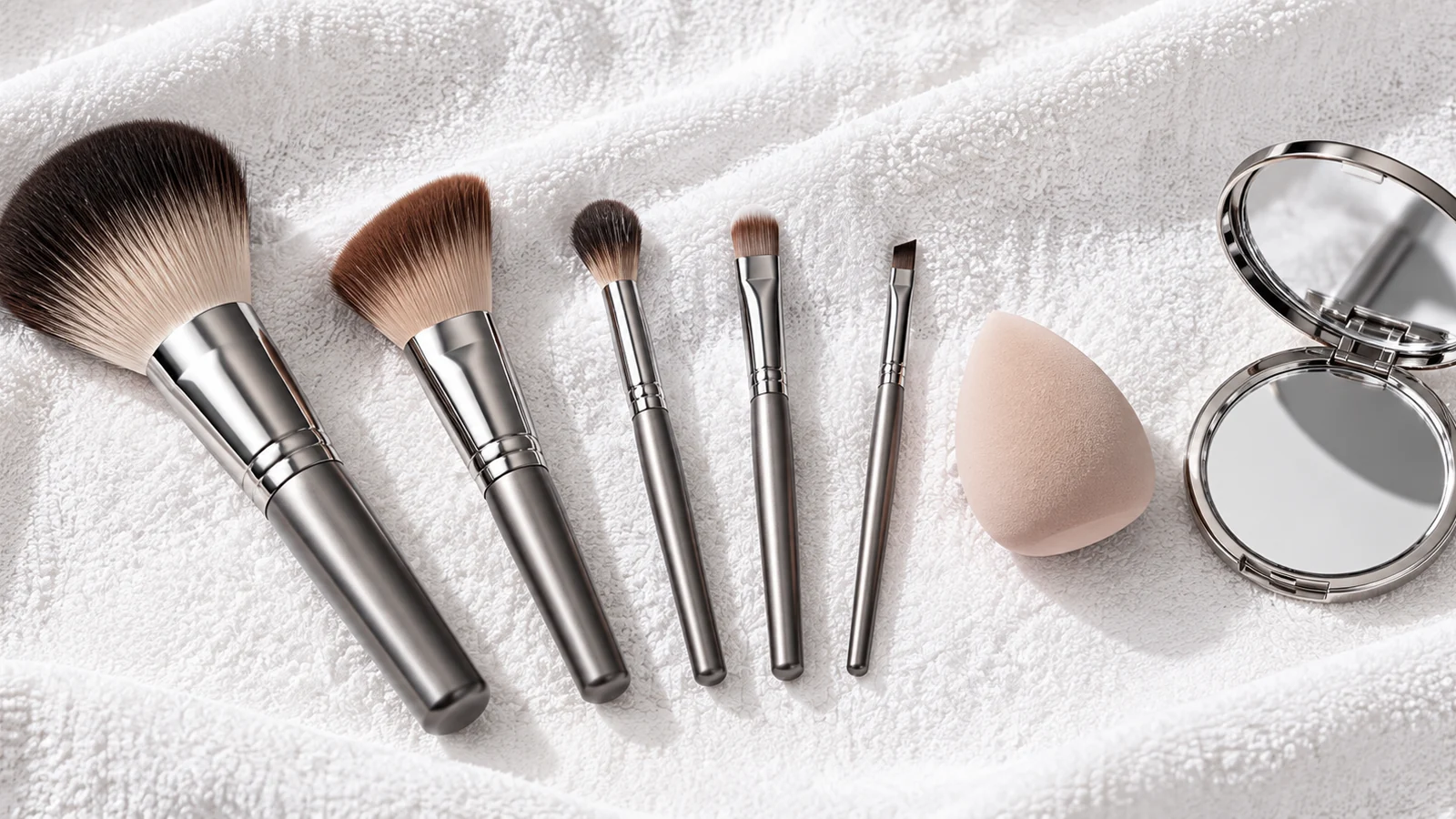
Small brushes give precise placement; larger ones blend over wider areas. An oversized brush can carry shadow beyond the intended area on a compact lid. The following sections explore decisions, application and common pitfalls step by step.
Match size to the area
Small brushes give precise placement; larger ones blend over wider areas. An oversized brush can carry shadow beyond the intended area on a compact lid.
A smaller tool gives more control for placement in an eye corner; a soft brush with short movements can refine the perimeter. One brush does not need to perform every task. Choose the tool for the job rather than only by its label.
Use lighter pressure
Work with gentle pressure and build pigment gradually. A clean or lightly loaded brush softens edges without adding more colour everywhere.
Place colour in the main area first, then refine the edge with a lightly loaded brush. A blending brush carrying too much pigment can spread darkness instead of softening it. A lighter grip farther from the brush head can support gentler control.
Different tools, different jobs
Brushes place product while sponges unify texture. Prepare the sponge as directed; dragging it strongly may disturb targeted coverage.
Compare gentle pressing with long sweeping movements when preserving local coverage. They produce different results. Test a clean tool on a small area and check whether it lifts product or simply refines the texture.
Keep tools clean
AAD suggests washing personal brushes every seven to ten days. Clean the tips with lukewarm water and suitable cleanser, avoid soaking the handle connection and dry flat. Professional tools need appropriate between-client hygiene.
Cleaning, disinfection and drying are separate tasks. When working on different people, follow the tool and hygiene-product instructions. A quick spray without the required method and contact time does not establish appropriate hygiene.
Practise brush pressure
Use one colour and one brush to make marks with light, medium and firm pressure. Compare coverage and edges. Practise short controlled movements for blending and deliberate placement for depositing colour.
Choose for the task
Choose a brush for the area size and the intended movement. A large tool can spread pigment beyond a small lid area. Try a smaller clean brush for refining edges and inspect the result up close.
Frequently asked questions
Is a more expensive brush always better?
Assess size, shape, condition and suitability for the task; price alone is insufficient.
Can one brush place and blend?
It may, but a clean or lightly loaded brush helps avoid unintentionally spreading pigment.
Is a personal cleaning schedule enough for clients?
No. Professional work requires appropriate cleaning and disinfection between people.


