
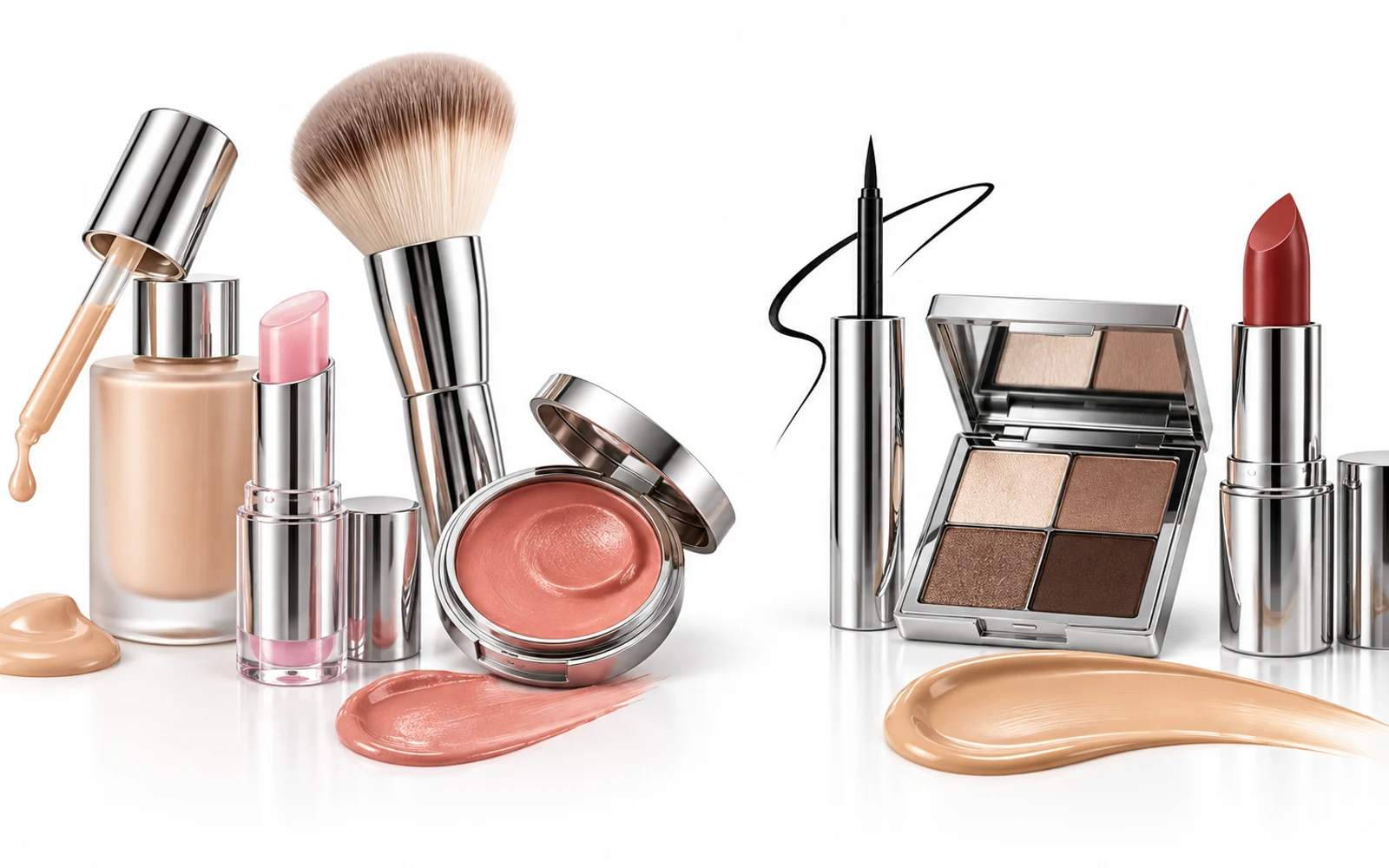
Natural makeup favours light coverage and soft edges. Classic styling usually brings more precision to liner and lips. The approaches can combine rather than compete. The following sections explore decisions, application and common pitfalls step by step.
Two ways to define features
Natural makeup favours light coverage and soft edges. Classic styling usually brings more precision to liner and lips. The approaches can combine rather than compete.
For a useful comparison, keep one element consistent. Use the same base and blush while changing eyeliner definition. This helps separate a style preference from a difference caused by colour or photographic lighting.
Skin and colour
Both looks can preserve the actual complexion. Finish and intensity create the difference: classic does not require a thick base, and natural does not require excessive glow.
Natural makeup emphasises softened boundaries; classic makeup uses selected clear lines to organise the look. Both benefit from an appropriate base undertone and a balanced face-to-neck match. Choose coverage independently of the style name.
Liner shape
Classic liner is more deliberate and visible; a natural edit may use brown close to the lashes. Judge wing length with the eyes open.
Mark the direction of a wing with the eye open before completing it. If the line disappears into a fold, adapt its shape to your lid. Copying a reference exactly may not produce the same effect on your eye.
Make it personal
If you wear little makeup day to day, start naturally and add one classic detail. If liner feels familiar, keep it and balance the lip and lash intensity.
Record how the look feels in the mirror: familiar, soft, defined or dramatic. A classic eye can work with a natural lip. Describe the combination by its components during the consultation instead of relying only on a broad label.
One face, two intensities
Keep the base and lip colour consistent and change only eye definition: softly diffused brown on one trial, clearer liner on another. This exercise reveals how small choices build the overall style.
Choose your own balance
When eyes are the focus, assess the lips and cheeks in the same light. The aim is an individual balance that suits your makeup habits, comfort and outfit.
Frequently asked questions
Does classic mean red lipstick?
No. Lips may be nude or rose; selected clear lines often contribute to the classic effect.
Does natural makeup mean no coverage?
Coverage can be targeted and controlled while preserving facial character and soft boundaries.
Which is better for hooded lids?
No style label gives a fixed answer. Placement should be assessed with the eye open.


